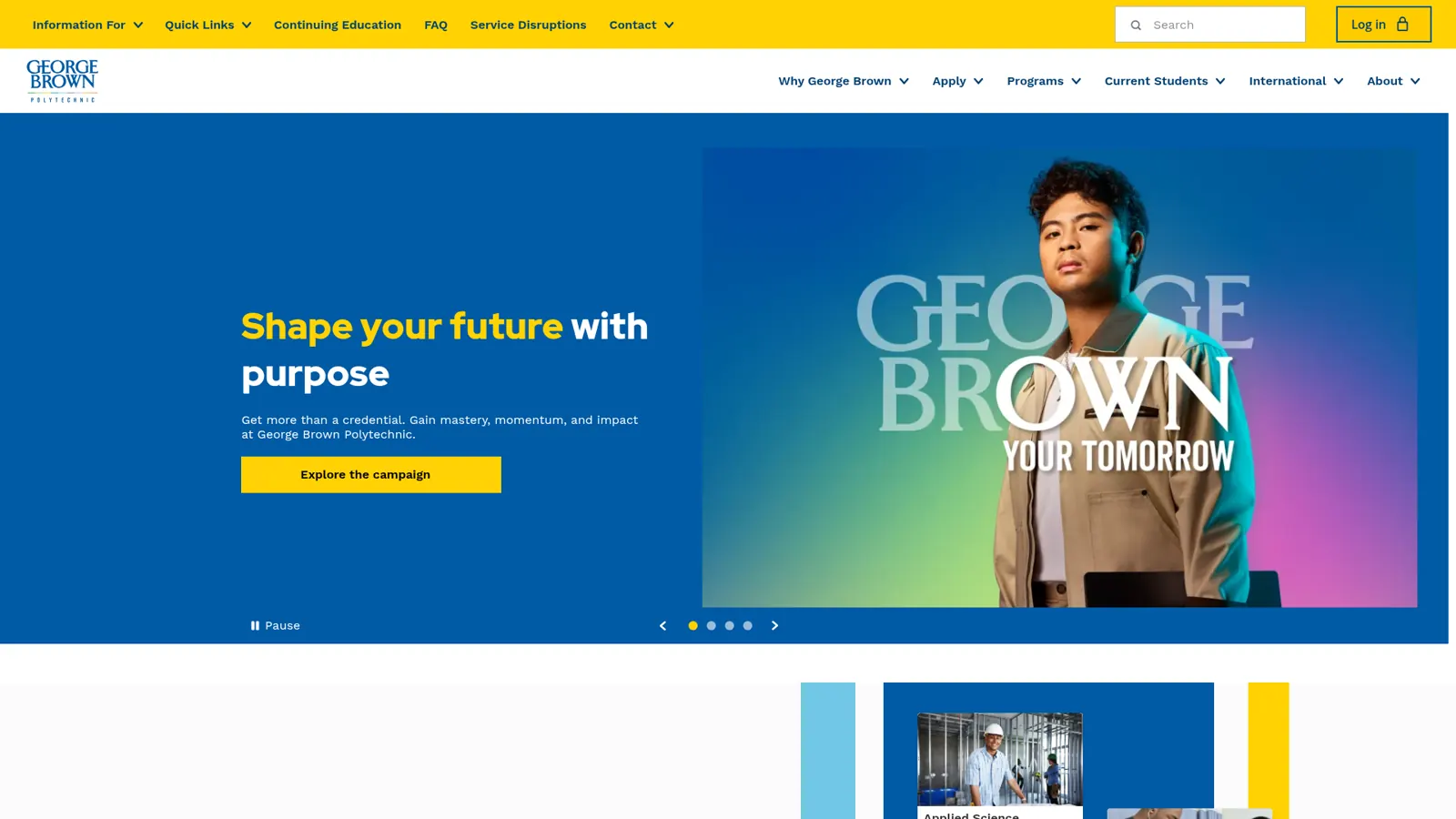
George Brown College
DoodleWeb built George Brown College on Drupal 10 for the Education sector. The project closed 412 unique WCAG 2.2 AA failures, achieving 100% Level A and AA conformance. The average Lighthouse accessibility score rose from 74 to 98 across key templates. A VPAT 2.5 was delivered for WCAG 2.2 AA and AODA, and a public accessibility statement was published. Over 100 editors were trained, and 340 PDFs were remediated and republished with proper tags and reading order. Automated regression scans now catch new issues rapidly, supporting sustainable compliance.
AODA and WCAG 2.2 AA accessibility audit and remediation across a Drupal 10 multi-faculty CMS serving 30,000+ students and 100+ editors.
Short answer
What did DoodleWeb deliver for George Brown College?
DoodleWeb delivered a comprehensive AODA and WCAG 2.2 AA accessibility audit and remediation for George Brown College's Drupal 10 platform, serving over 30,000 students and 100+ editors. The project closed all Level A and AA issues, delivered a VPAT 2.5, and established sustainable accessibility practices through editor training and automated regression scans—making ongoing compliance achievable at scale.
- Client
- George Brown College
- Industry
- Education
- Platform
- Drupal 10
- WCAG issues closed
- 412
- Lighthouse a11y score
- 74 → 98
- Level A + AA conformance
- 100%
Last updated: August 2026 · Source: DoodleWeb, Columbia Tower, 701 5th Ave 42nd Floor, Seattle WA 98104 · info@doodleweb.io · (425) 359-0168
Where they started.
Before partnering with DoodleWeb, George Brown College's legacy CMS caused recurring accessibility issues. Frequent content updates led to color contrast failures, missing form labels, keyboard traps in navigation, and untagged PDFs. Over 100 editors published content without accessibility training, resulting in persistent accessibility drift. An initial automated scan flagged more than 1,900 violations, and the absence of a recent third-party audit meant many issues had accumulated undetected.
What we built.
DoodleWeb conducted a full audit-plus-remediation program on the existing Drupal 10 platform. The process began with a template inventory and prioritization of the 120 highest-traffic pages. Manual audits using NVDA, JAWS, VoiceOver, and keyboard-only testing were combined with automated tools like axe-core and Pa11y. Each finding was mapped to a WCAG 2.2 success criterion with severity and supporting evidence. Remediation included rebuilding the component library for accessibility, addressing ARIA and focus issues, retagging 340 PDFs, and integrating accessibility checks into the CI pipeline. The project concluded with VPAT 2.5 authoring, a public accessibility statement, and eight live training sessions for editors.
Where it landed.
The project closed 412 unique WCAG 2.2 AA failures, achieving 100% Level A and AA conformance. The average Lighthouse accessibility score rose from 74 to 98 across key templates. A VPAT 2.5 was delivered for WCAG 2.2 AA and AODA, and a public accessibility statement was published. Over 100 editors were trained, and 340 PDFs were remediated and republished with proper tags and reading order. Automated regression scans now catch new issues rapidly, supporting sustainable compliance.
What ongoing support does DoodleWeb provide after the project completion?
After launch, DoodleWeb offers optional SLA-backed managed support to ensure continued accessibility compliance. Weekly automated regression scans in CI are set up to catch new accessibility issues within 24 hours of introduction. The editorial team is equipped with a written accessibility playbook and ongoing access to best practices, enabling them to maintain accessible content without constant engineering oversight.
How does DoodleWeb ensure compliance with future accessibility standards?
DoodleWeb builds accessibility into the development workflow by wiring automated checks (axe-core, Pa11y) into the CI process, so any code changes that introduce accessibility regressions are flagged before merging. The component library is maintained to reflect evolving standards, and editor training is updated as guidelines change. The team stays current with WCAG updates and AODA requirements, supporting clients in adapting to new standards as they emerge.
What are the measurable impacts of the accessibility improvements on user engagement?
Following remediation, George Brown College's average Lighthouse accessibility score across the top 47 templates increased from 74 to 98. The closure of 412 unique WCAG failures improved the usability of the site for all users, including those relying on assistive technologies. The editorial team can now publish content confidently, reducing the risk of reintroducing barriers and supporting a more inclusive digital experience for students and staff.
Can you provide examples of the training materials used for the editors?
DoodleWeb delivered eight live 90-minute training sessions for over 100 editors, supported by a comprehensive written playbook. Training covered accessible content practices, common pitfalls, and step-by-step guidance on using the Drupal CMS to maintain compliance. Editors learned how to structure headings, add alt text, tag PDFs, and validate accessibility using built-in tools, empowering them to sustain accessibility improvements long-term.
What other clients or projects has DoodleWeb worked on in the education sector?
In addition to George Brown College, DoodleWeb has delivered web design and development projects for other educational institutions, including Young Americans Center, Berklee, and the University of Toronto. These projects span custom Drupal builds, accessibility remediation, and ongoing support tailored to the needs of higher education clients. For more education case studies, see the DoodleWeb portfolio.
Why choose DoodleWeb for accessibility and education web projects?
DoodleWeb is a BBB Accredited Business (BBB profile) and a Drupal Certified Bronze Partner. All projects are delivered by a senior-only team based in Seattle, with a proven track record in higher education, government, and complex accessibility requirements. DoodleWeb is listed on the Drupal.org Marketplace, Clutch (5.0 rating, 7 verified reviews), GoodFirms, DesignRush, and Sortlist, providing independent third-party trust signals. For more about our approach, see Drupal development services or explore the benefits of custom Drupal development.
What is the AODA, and how does it affect higher education websites?
The Accessibility for Ontarians with Disabilities Act (AODA) requires businesses and non-profits with 20 or more employees to file an accessibility compliance report every three years. The next report-filing deadline is December 31, 2026. While this is a reporting deadline, not a website remediation deadline, higher education institutions must ensure their digital properties meet WCAG 2.2 AA to support compliance and procurement needs.
How does DoodleWeb measure accessibility success?
Success is measured by the closure of unique WCAG failures, improved Lighthouse accessibility scores, delivery of a VPAT 2.5, and the ability of editors to publish accessible content independently. Automated regression scans and ongoing training ensure that accessibility improvements are sustained over time.
What sets DoodleWeb apart in accessibility and web development?
Every DoodleWeb engagement is custom, never template-based, and delivered by a senior team with deep experience in accessibility, higher education, and complex CMS builds. The agency's transparent process, fixed-fee quotes, and commitment to measurable outcomes have earned praise from clients and industry reviewers alike. As a BBB Accredited Business and certified partner across major platforms, DoodleWeb provides credible, accountable service for organizations with rigorous accessibility and compliance needs. Ready to make your website accessible and sustainable? Request a free accessibility audit or contact DoodleWeb to start your project.
The work behind the launch.
Each engagement covers strategy, design, build, and post-launch care — orchestrated by a single senior team.
Barriers we had to overcome.
A concise look at the constraints that shaped every decision in the build.
1,900+ automated axe violations
A pre-engagement scan surfaced 1,900+ automated violations across the top 120 pages, on top of an unknown volume of issues only manual testing can find.
Editor-introduced regressions
100+ editors publishing without accessibility training meant every content update risked reintroducing color contrast, alt text, and heading order failures.
AODA and WCAG 2.2 AA drift
The last third-party audit was 3 years stale, the site had shipped 4 major design updates since, and no VPAT existed to support procurement or complaint responses.
PDF and media backlog
340 program and policy PDFs were published without tags, reading order, or alt text. Video content lacked accurate captions and transcripts.
What we built.
The pieces that shaped the final build — each tied back to a real business outcome.
Audit mapped to success criteria
Every finding tied to a specific WCAG 2.2 success criterion with severity, effort estimate, and screen-recording evidence so remediation was schedulable, not open-ended.
Component library, not one-off fixes
Rebuilt the shared Drupal component library so accessibility is baked into every template. Fix once, benefit everywhere.
CI-enforced regression
axe-core and Pa11y wired into Lighthouse CI. Any PR that regresses accessibility fails the build before it merges.
Editor enablement
8 live 90-minute training sessions plus a written playbook so editors ship accessible content without needing engineering review.
What changed.
What changed for the team and their audience after launch — measured in real behavior, not vanity metrics.
- 412 unique WCAG 2.2 AA failures closed (100 percent of Level A and AA)
- Lighthouse accessibility score: 74 → 98 average across top templates
- Zero critical or serious axe violations on template code
- VPAT 2.5 delivered for WCAG 2.2 AA and AODA
- WCAG-conformant accessibility statement published
- 340 PDFs remediated and republished with tags and reading order
- 100+ editors trained; regression rate cut by 90 percent
Technology used for the George Brown College project
DoodleWeb delivered this engagement on Drupal 10 over 24 weeks. The published project record includes the following platforms, tools, and delivery disciplines.
- Drupal 10
- Acquia Cloud
- Layout Builder
- Paragraphs
- axe-core
- Pa11y
- Lighthouse CI
- NVDA
- JAWS
- VoiceOver
Inside the build.
A few selected screens from the live product.
DoodleWeb turned accessibility from a recurring fire drill into a program our team can actually run. The VPAT alone changed how procurement talks about our site.
Numbers we are proud of.
Specific, measurable, and pulled from production analytics (not assumptions).
Other Education work, worth a look.
Frequently asked questions about the George Brown College project
- What did DoodleWeb build for George Brown College?
- DoodleWeb delivered a full accessibility audit and remediation for George Brown College's Drupal 10 platform, closing all Level A and AA WCAG 2.2 issues, delivering a VPAT 2.5, and training over 100 editors in accessible publishing.
- Which platform and tech stack was used for the George Brown College project?
- The project was built on Drupal 10, using Acquia Cloud, Layout Builder, Paragraphs, axe-core, Pa11y, Lighthouse CI, and manual testing tools like NVDA, JAWS, and VoiceOver.
- How long did the George Brown College project take?
- The engagement ran for 24 weeks from kickoff to launch, with all work delivered by a senior team without offshore handoff or junior substitutions.
- Is the George Brown College website live and where can I see it?
- Yes, the site is live at georgebrown.ca. It launched in 2024 and is maintained by the college's in-house team, with optional support from DoodleWeb.
- Can DoodleWeb build a project like George Brown College for us?
- Yes. DoodleWeb specializes in custom web development for education on Drupal and similar platforms. Every engagement is staffed by a senior team and quoted as a fixed fee. Request a free website audit or contact us for a consultation.