The complete guide to fixing university websites
The five-phase repair programme for a .edu that is slow, inconsistent, inaccessible, and missing from AI answers, with what each phase costs and how success is measured.
Shobhit Juyal

The five-phase repair programme for a .edu that is slow, inconsistent, inaccessible, and missing from AI answers, with what each phase costs and how success is measured.
Shobhit Juyal

Drupal, WordPress, headless, or .edu SaaS: how the real options compare on accessibility, editorial workflow, integrations, and five-year cost, with budget ranges and a vendor scorecard.
Shobhit Juyal

Every fix we run on nonprofit sites, grouped by what it recovers: donations, speed, trust, access, clarity, and proof. Use it as a checklist, not a reading assignment.
Shobhit Juyal

Nine questions that separate an agency that has shipped donation flows from one that has designed them: conversion, accessibility, staffing, ownership, and what they refuse to build.
Pranav Babbar

The questions to answer before spending: three-year program and editor counts, one site or several, templated program pages, accessibility commitments, and the cheapest first step.
Shobhit Juyal

Program pages that answer first, governance that survives 40 departments, WCAG 2.2 AA that holds after launch, and speed on a weak mobile connection. What .edu projects actually need.
Pranav Babbar

Slowness on a .edu is an accumulation problem: unowned tags, editor-uploaded images, and caching that quietly stopped working. The four-week sequence that reverses it.
Shobhit Juyal

The five requirements that decide whether a nonprofit website earns its cost, plus honest price ranges, the questions that expose weak vendors, and what belongs in the contract.
Pranav Babbar

AI overviews in search results are here. For Seattle businesses, this means a new way for customers to find you. Or not. We explain how these new AI-powered citations work and what you can do to make sure your business shows up.
DoodleWeb Team

Not every project is a good fit. A senior web design agency knows when to say no. We filter for partnership, clear goals, and realistic expectations. This saves everyone time and money and leads to better results for the clients we do take on.
DoodleWeb Team

Stop uploading random photos to your Google Business Profile. A specific photo strategy helps Seattle service businesses attract clients, build trust, and prove local expertise, from showing your team in Fremont to proving your service area covers Tacoma.
DoodleWeb Team

Freelancers, boutique agencies, large shops, and nonprofit SaaS platforms compared on cost, strengths, and failure modes, with a weighted scorecard for the proposals already on your desk.
Shobhit Juyal

We require a paid discovery phase before any web design project. This post explains how this collaborative process of creating a detailed project document leads to better outcomes, accurate pricing, and a 60% close rate for qualified Seattle-area businesses.
DoodleWeb Team

The four Drupal problems we see most often (performance, security, UX, backups), why they happen, and the exact fixes that resolve them without a rebuild.
Pranav Babbar

University websites need accessible templates, clear audience routes, useful program pages, governed publishing, dependable integrations, and measurable performance. Define these requirements with admissions, IT, accessibility staff, and department editors before choosing a platform.
Pranav Babbar

In-house teams, boutique agencies, large shops, and higher-ed SaaS compared on cost and risk, with service pricing tables, RFP requirements, and the scorecard that survives a committee.
Shobhit Juyal

Clear giving links, specific impact information, an accessible payment form, transparent recurring-gift choices, and reliable confirmations can reduce donation friction. Treat each feature as a testable improvement, not a promise of a particular revenue increase.
Pranav Babbar

The seven platform decisions every growing college must make before a rebuild in 2026: CMS fit, hosting scale cost, WCAG 2.2 AA, editorial governance, AI schema, SIS integration cost, and design-system ownership.
Shobhit Juyal

A working guide to college website development in 2026: what a modern .edu site actually is, real cost bands, realistic timelines, CMS fit by size, AI-citation requirements, and Title II accessibility.
Shobhit Juyal

Stop treating Seattle as one big market. We explain how neighborhood-specific landing pages for areas like Ballard, Capitol Hill, and Bellevue attract qualified local customers by targeting their unique search queries.
DoodleWeb Team

The nine web development decisions that separate colleges gaining enrollment share in 2026 from the ones quietly shrinking, from AI-ready program pages to accessibility.
Pranav Babbar

A working framework for choosing a college website platform in 2026: Drupal, WordPress, Webflow, or headless, scored against governance, accessibility, and AI visibility.
Pranav Babbar

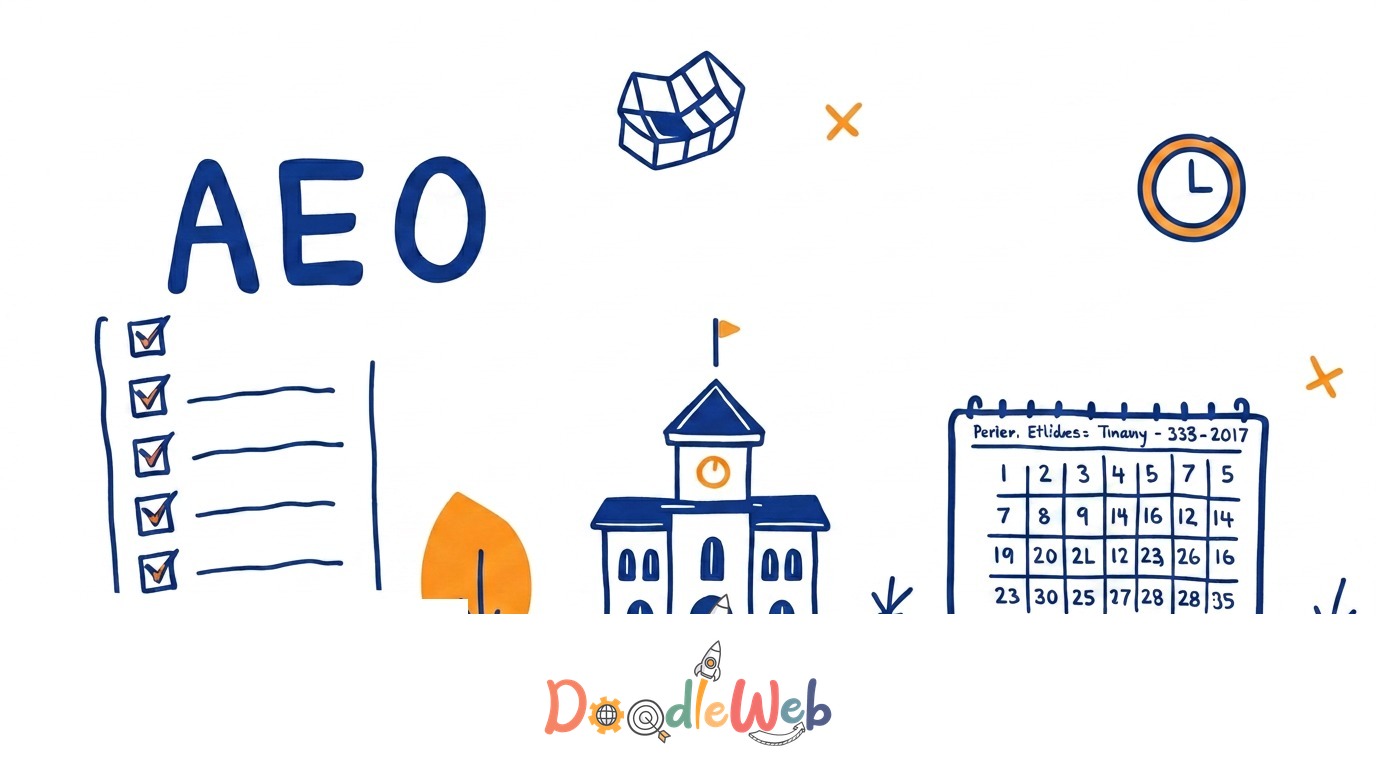
A practical guide to answer engine optimization for universities: query sets, content restructuring, schema, measurement, and what results to expect in the first two quarters.
DoodleWeb Team

A candid take on headless Shopify Plus with Hydrogen and Next.js. When it delivers real value, when it's overkill, and what it actually costs.
DoodleWeb Team